Custom Plastic Injection Molding Services

Injection Molding

What Is Plastic Injection Molding?

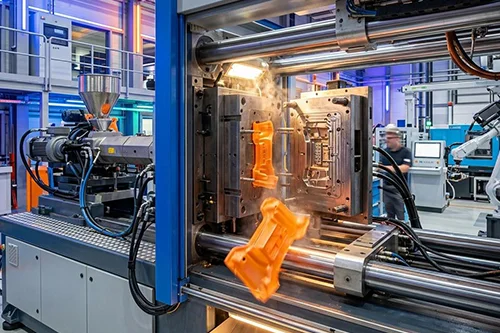
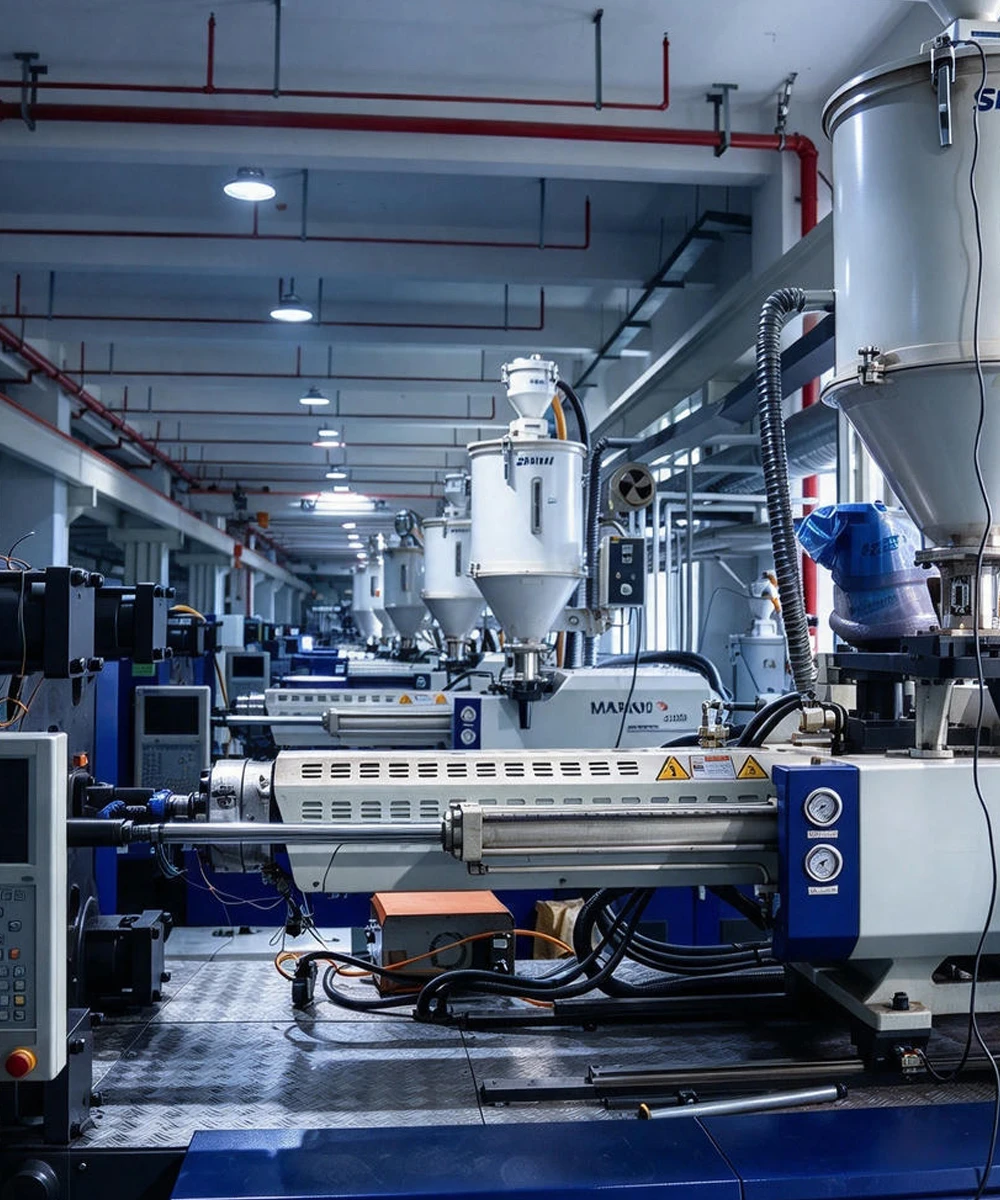
Plastic injection molding is a manufacturing process used to produce plastic components by injecting molten plastic into a mold cavity. Once the material cools and solidifies, the molded part is removed and prepared for its intended application.

This process is widely used to manufacture components with repeatable shapes, detailed features, and consistent appearance. After the mold has been developed and validated, injection molding can be an efficient solution for producing multiple parts with consistent design specifications.

For B2B manufacturers, injection molding can support a wide range of requirements, from product development and functional testing to recurring production runs. Material selection, part geometry, tooling design, and expected production volume all influence the most suitable manufacturing approach.

Injection Molding Capabilities

Make the move from prototyping to on-demand manufacturing for affordable, high-quality molded parts within days. Better yet, your prototyping tool is free once you shift to an on-demand manufacturing tool. Working with a single supplier that provides free design consultation services also massively speeds up the manufacturing process, allowing for greater supply chain flexibility, more consistent parts, and making qualification a breeze.

Plastic Injection Molding

Manufacturing custom thermoplastic components using purpose-designed molds for functional parts, housings, and industrial products.
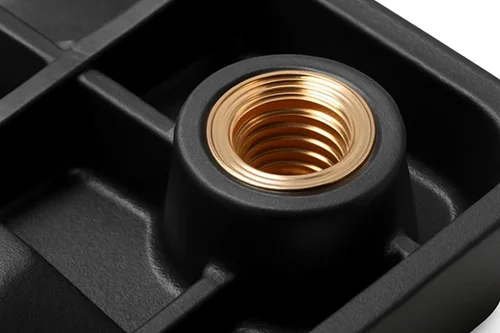
Insert Molding

Integrating metal inserts or other compatible components into a molded plastic part to support fastening, electrical connections, or assembly requirements.
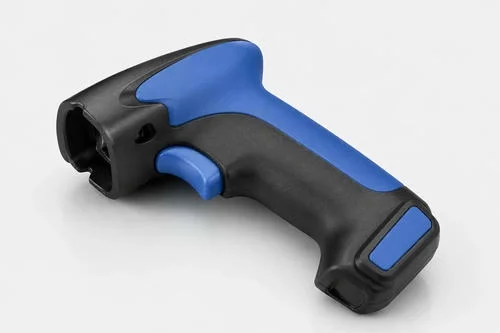
Overmolding

Combining compatible materials in a molded component to achieve functional or design features such as soft-touch surfaces, grips, or integrated interfaces.
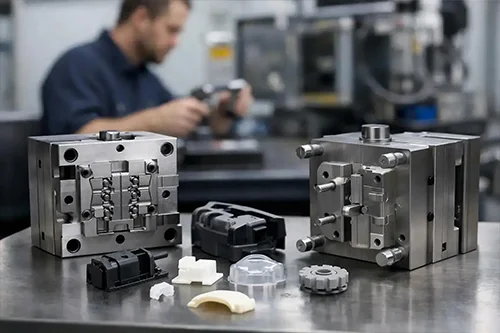
Prototype & Production Molding

Supporting design validation, sample evaluation, and production planning based on part complexity, tooling requirements, and expected order quantities.
Materials

Injection Molding Materials for Custom Plastic Parts

Choose materials based on mechanical performance, operating environment, appearance, and cost requirements.

Thermoplastics

Explore a range of thermoplastic materials to meet your requirements for strength, durability, flexibility, and application-specific performance.
  • ABS
  • Acetal
  • Acetal Copolymer
  • Acetal Homopolymer/Delrin
  • ETPU
  • HDPE
  • LCP
  • LDPE
  • LLDPE
  • Nylon
  • PBT
  • PC/ABS
  • PC/PBT
  • PEEK
  • PEI
  • PET
  • PETG
  • PMMA (Acrylic, Plexiglas)
  • Polycarbonate
  • Polypropylene
  • PPA
  • PPE/PS
  • PS
  • PSU
  • TPU

Thermosets

Explore thermoset materials designed to deliver heat resistance, dimensional stability, and reliable performance in demanding applications.
  • Standard silicone (30, 40, 50, 60, and 70 durometers)
  • Medical-grade silicone
  • Optical-grade silicone
  • Fluorosilicone (fuel and oil resistant)

View our Success Gallery to see our work!

Injection Molding Applications Across Industries

Custom molded components for a wide range of industrial and commercial products.

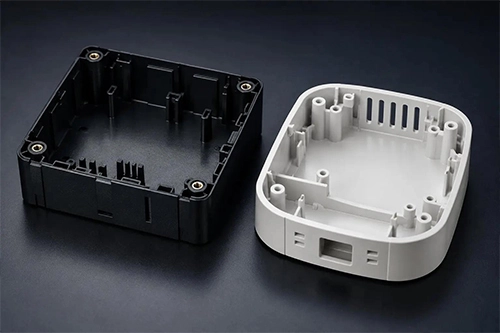
Industrial Equipment

Housings, protective covers, mounting components, and equipment enclosures.
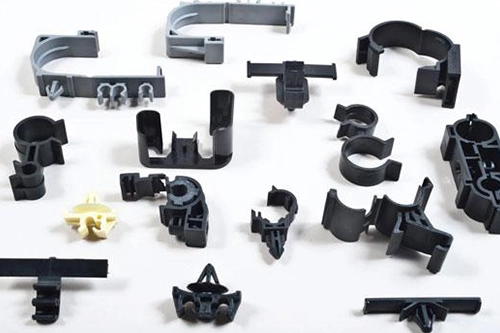
Automotive Components

Interior components, clips, connectors, and molded functional parts.
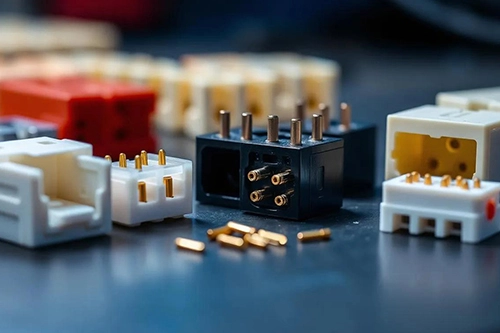
Electronics & Electrical

Device housings, insulating components, connector bodies, and covers.
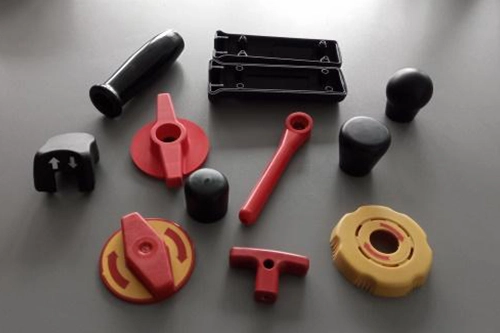
Consumer Products

Handles, knobs, caps, product enclosures, and custom plastic parts.
Design for Manufacturability in Injection Molding

A well-designed molded part begins with a clear understanding of its function, material requirements, and manufacturing constraints. Reviewing these factors before tooling helps identify potential design issues and supports more efficient production planning. Key considerations include:
  • Wall Thickness: Aim for reasonably uniform wall sections to help reduce uneven cooling, sink marks, and warpage.
  • Draft Angles: Incorporate suitable draft on mold-facing surfaces to facilitate part ejection.
  • Ribs and Bosses: Design reinforcing features carefully to balance structural performance and molding quality.
  • Gate and Parting Line Placement: Consider their impact on material flow, appearance, and part functionality.
  • Shrinkage and Dimensional Requirements: Account for material-specific shrinkage and identify critical dimensions before tooling begins.
  • Quality Inspection: Define critical features, acceptance criteria, and inspection requirements before production.
The appropriate design rules depend on the resin, part geometry, mold construction, and intended application. Final recommendations should be confirmed during a project-specific design review.

From Drawing Review to Mass Production

A clear RFQ process helps reduce back-and-forth and gives buyers a faster path to a manufacturable solution.

Submit Your Design

Provide your 3D CAD files, 2D drawings, material preferences, estimated quantities, and key specifications.

Design & Manufacturability Review

Review part geometry, molding considerations, material requirements, and tooling options.

Tooling & Project Approval

Confirm the proposed tooling approach, project scope, specifications, and commercial terms before proceeding.

Sample Validation

Evaluate sample parts against the agreed requirements and confirm any necessary adjustments before production.

Production & Delivery

Proceed with the agreed production plan, inspection requirements, packaging, and delivery arrangements.

FAQ

Injection Molding FAQs

What is plastic injection molding?

Plastic injection molding is a manufacturing process in which molten plastic is injected into a mold cavity, cooled, and removed as a finished component. It is commonly used to produce repeatable plastic parts in a range of shapes and sizes.

Common materials include ABS, polypropylene (PP), polycarbonate (PC), nylon (PA), POM, PMMA, and TPU. Material suitability depends on the part’s mechanical requirements, operating environment, appearance, and production process.

It can be suitable for low-volume projects, prototypes, and bridge production, depending on tooling costs and part requirements. For very small quantities, CNC machining or 3D printing may be worth comparing before choosing a process.

Major cost factors include mold complexity, mold material, part size, resin selection, surface finish, required tolerances, order quantity, and secondary operations. Tooling and part costs should be evaluated together when comparing manufacturing options.

A 3D CAD model and a dimensioned 2D drawing are useful starting points. Include the preferred material, estimated quantity, critical dimensions, cosmetic requirements, and any applicable specifications if available.

Lead time depends on tooling design and manufacture, material availability, sample approval, production quantity, and shipping. A project-specific timeline should be confirmed after the design and requirements have been reviewed.

Yes. Part geometry, resin, color, texture, inserts, and certain secondary operations can be specified according to the project. Feasibility depends on mold design, material compatibility, and manufacturing requirements.

Scroll to Top