CNC Machining Materials: Choosing the Right Material for Your Component
Choosing the right CNC machining materials for a component can be challenging. KOHAM has experience machining parts from hundreds of metal and plastic materials. Selecting a material that performs well in your application’s operating environment is essential.
Not sure which CNC machining materials fit your part? Contact KOHAM for guidance.
A forged aluminum grade that gains strength through heat treatment. It pairs high strength with good toughness at low weight, and is typically specified for aircraft and aerospace structural parts.
Learn More
Alloy Steel
Steel built from iron and carbon, with elements such as manganese, chromium, vanadium, nickel or tungsten added to raise strength and toughness. Grades split into low-alloy and high-alloy groups and are common for shafts, gears, and load-bearing parts.
Learn More
Aluminum
A silvery, lightweight metal that is soft, durable, and resistant to corrosion. It is one of the most common CNC machining materials and is widely cut on 5-axis equipment for aerospace, military, and automotive components.
Learn More
Brass
An alloy of copper and zinc, with the two metals blended in different ratios to produce a family of grades. It is one of the easier CNC machining materials, offering good machinability, moderate strength, and reliable electrical conductivity for fittings, connectors, and bushings.
Learn More
Bronze
Formed from copper and tin, this alloy balances strength, hardness, and thermal conductivity with the ductility needed for machining. Wear parts such as bearings, bushings, threaded fittings, and fasteners are among its most frequent uses.
Learn More
Carbon Steel
Steel in which carbon is the primary alloying element, sometimes with small amounts of nickel, copper, or manganese. Strength rises as carbon content increases, and it is widely used for axles, gears, shafts, rails, pipelines, and couplings.
Learn More
Cobalt-Rhenium
An alloy of cobalt and rhenium that keeps its strength at very high temperatures and resists corrosion. KOHAM machines it into complex aerospace, energy, and surgical parts that must perform under extreme conditions.
Learn More
Copper
A soft metal with excellent electrical and thermal conductivity. Because pure copper is difficult to machine, copper alloys are more often used for electrical and thermal components such as wiring, motors, and heat exchangers.
Learn More
Hardened Steel
Medium- or high-carbon steel that has been heat-treated to raise its toughness. Final hardness depends on the carbon content, and it is commonly used for nozzles, surgical instruments, wear parts, and heavy-equipment components.
Learn More
Hastelloy
Built on nickel, chromium, iron, and molybdenum, this alloy combines high strength with strong corrosion resistance. Machinists commonly produce flanges, hubs, shafts, and ring-shaped parts from it for chemical processing.
Learn More
Haynes
A nickel-chromium-tungsten-molybdenum alloy designed for high-temperature strength. It also resists oxidizing conditions at up to about 1149°C over long service periods, making it suited to aerospace and power-generation parts.
Learn More
Inconel
A nickel-chromium superalloy made to survive oxidation and corrosion under harsh conditions. It is widely specified for combustors, seals, turbine blades, thrusters, and rotor shafts.
Learn More
Invar
An iron-nickel alloy with exceptionally low thermal expansion, the lowest of common metals from room temperature to about 230°C. That dimensional stability suits it to precision instruments and optical equipment.
Learn More
Kovar
An iron-based alloy of nickel and cobalt engineered to expand at the same rate as glass and ceramics. That match makes it a go-to for glass-to-metal seals in vacuum tubes, lamps, and similar electronics.
Learn More
Maraging Steel
Iron-nickel steels strengthened by adding cobalt, titanium, molybdenum, and aluminum. They deliver very high strength and toughness while retaining ductility, and are used for tooling and high-performance parts.
Learn More
Molybdenum
A silver-white refractory metal that resists corrosion and holds its strength even when drawn thin. It is often specified for aerospace parts such as turbo pumps, propulsion systems, and satellite components.
Learn More
Monel
A group of alloys dominated by nickel with substantial copper, combining strength with strong corrosion resistance. Applications range from marine hardware to military and aerospace parts such as thrusters.
Learn More
Nickel 200
Nearly pure nickel that resists corrosion well and holds useful strength up to roughly 315°C. It can be shaped by hot or cold forming, and serves chemical processing and electronics work.
Learn More
Rhenium
A rare refractory metal with one of the highest melting points and strong performance at heat. Its main applications are electrical contacts, thermocouples, and thruster hardware across aerospace, electronics, and power generation.
Learn More
Stainless Steel
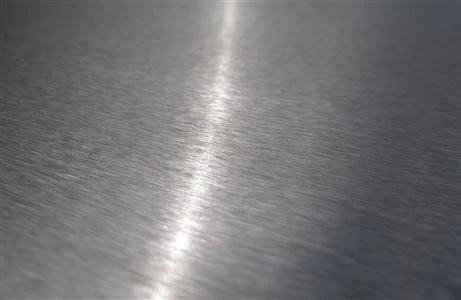
A stainless-grade tool steel that resists corrosion and polishes to a high finish. Mold makers favor it for small to mid-size inserts and cores.
Learn More
Stavax
Premium stainless steel is commonly used for small and medium-sized inserts and cores.
Learn More
Titanium
A lightweight metal often alloyed with iron, aluminum, vanadium, and molybdenum. It offers high tensile strength and corrosion resistance, ranking among common CNC machining materials for aerospace, marine, and aircraft parts.
Learn More
Tungsten
A very dense metal with an exceptionally high melting point. It resists sticking, welding, and electrical erosion, making it useful for aerospace parts, electrical contacts, and electrodes.
Learn More
Vim Var
A double-melting process that combines Vacuum Induction Melting with Vacuum Arc Remelting. It produces cleaner, more uniform high-grade steels and specialty alloys for demanding aerospace and other critical applications.
Learn More
Waspaloy
A precipitation-hardened nickel superalloy that retains strength at heat, with a service ceiling near 980°C. Typical applications are gas-turbine parts, thrusters, and hypergolic manifolds.
Learn More
KOHAM machines precision components in the CNC machining materials above, matched to your application's requirements.