Nationwide 5-Axis CNC Machining Services
5-Axis Machining
5-Axis CNC Machine Shop With Ultra Precision
It takes more than excellent machining and programming skills to perform true 5-axis machining work. Koham Industries specializes in 5-axis contour machining to manufacture almost impossible-to-make components other competitors cannot achieve. And with a team of engineers boasting 10+ years of in-house experience, why would you settle for anything less?
Have problem parts or impossible components? In a hurry? Call on the expertise of Koham.
What is 5-Axis CNC Machining?
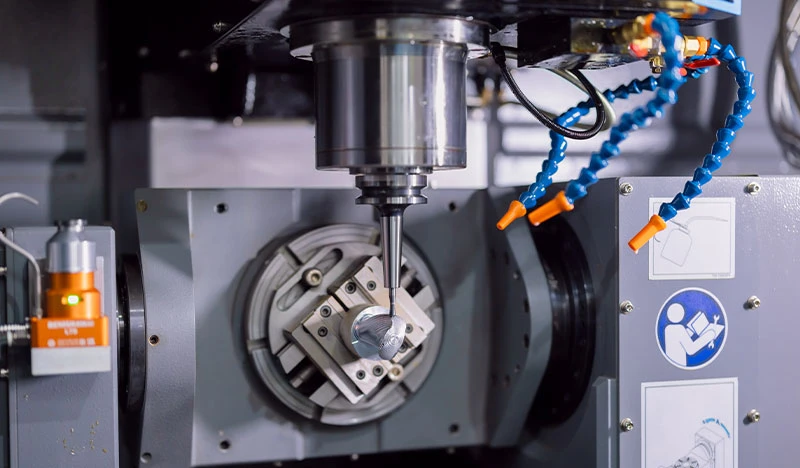
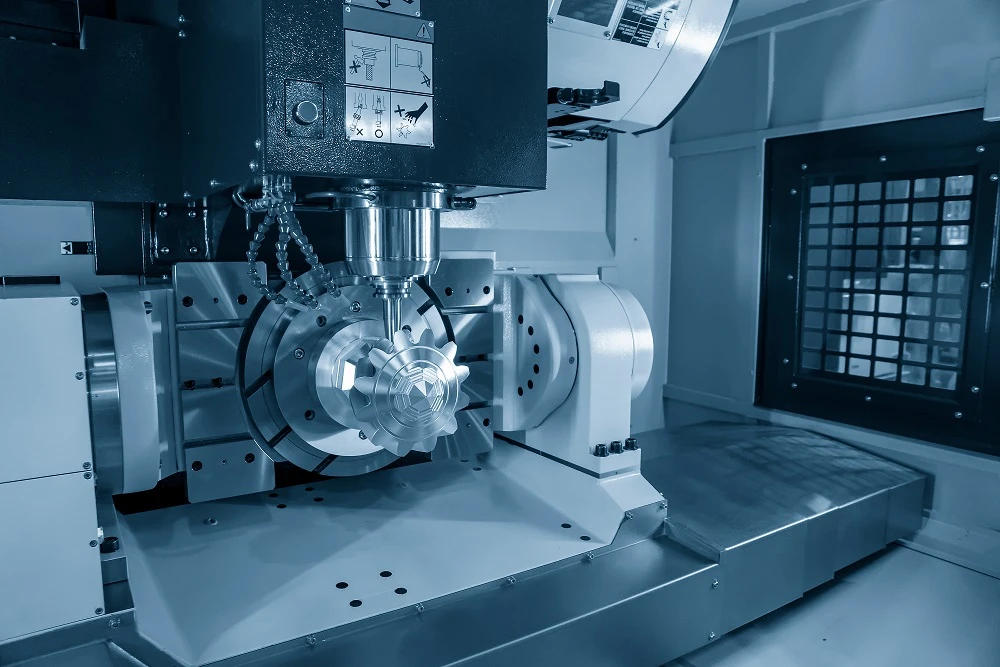
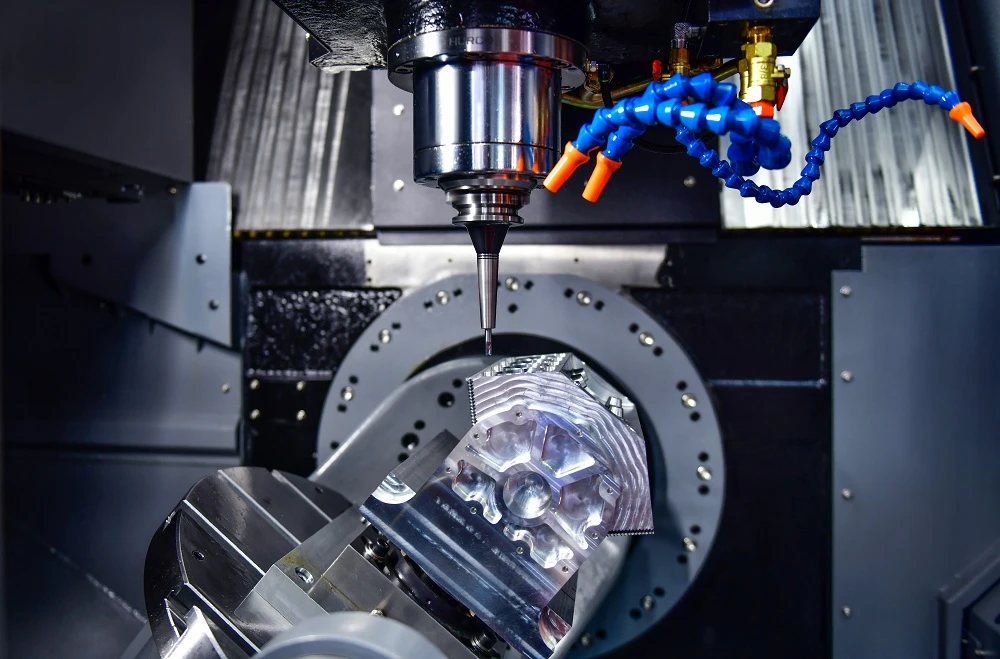
5-axis CNC machining is a manufacturing technique using computer-controlled technology to manipulate five axes on a machine tool, including X, Y, and Z linear axes, and two rotary axes. This machining method is prized for its versatility in shaping a wide array of intricate and complex parts in a single setup, particularly in industries like aerospace, automotive, medical, and plastic injection molding.
Why Choose Koham Industries for Advanced 5-Axis Machining?
Koham’s CNC machinists and EDM micromachiners use state-of-the-art 5-axis micro-milling centers to achieve precision and accuracy, with .005 micron positional and 1° angular accuracies. This advanced technology streamlines complex part production, reducing human involvement and ensuring repeatable accuracy.
Koham Industries is committed to client satisfaction, offering expertise and equipment to handle many micromachining challenges. Our track record includes offering CNC services to successfully produce parts other shops struggle with, making us the trusted choice for all your micromachining needs. And we have the capabilities to manufacture the parts you need in less time vs leading competitors.
5-Axis Machining Capabilities
Koham Industries’ 5-axis machining services shine in the production of intricate medium-sized components. Our 5-axis capabilities can be grouped into 3 different categories: general 5-axis, precision 5-axis, and super precision 5-axis.

General 5-Axis Machining
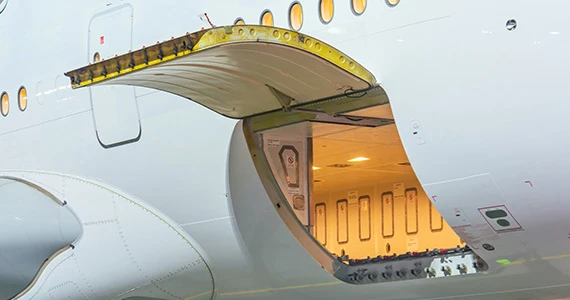
General 5-axis machining at Koham Industries is versatile and applicable across many industries. This includes crafting aerospace components with complex shapes, medical implants with intricate details, and molds for plastic injection molding. Our capability to machine from multiple angles makes it ideal for creating parts like titanium aircraft door stops and precision tools for various applications.

Precision 5-Axis Machining
In precision 5-axis machining, Koham Industries focuses on components with demanding specifications. Examples include parts for LASIK surgery devices, where a keratome, requiring a thickness accuracy of +/- 5 microns, is produced with ultra-precision. This level of precision extends to manufacturing 3D heart cavity instruments with intricate details.

Super Precision 5-Axis Machining
Super precision 5-axis machining by Koham Industries is exemplified in the production of ultra-high precision components like contour rings and hubs using materials such as Hastelloy. Our machinists, coupled with top-notch machinery, allow for the creation of microwave housing and sub-components for Titan rockets, demonstrating our capability to handle critical and challenging applications.
View our Success Gallery to see our work!
5-Axis Machining Services Set Koham Apart from the Competition
Koham Industries has provided 5-axis machining services on projects like prescription glass moldings, precision collimators, ventricular assist devices, and even highly precise keratomes used in LASIK eye surgery down to +/- 5 microns accuracy.
See our case study on previous 5-axis components produced for clients.
Materials
Machining Materials5-Axis Trusted by Koham Industries
Our capabilities cover a wide range of materials, ensuring we can meet the diverse and specific requirements of our clients across various industries. Koham Industries has extensive experience manufacturing component parts from different materials using 5-axis machining:
Alloy Steel
Alloy steels include additional elements beyond carbon, which improve their hardness, toughness, and resistance to fatigue and wear. These steels are widely used in construction, automotive, and machinery due to their enhanced properties.
| Alloy Steel | UNS Designation | DIN Designation | ISO Designation |
|---|---|---|---|
| 4140 | 1.7225 | 708M40 | 42CrMo4 |
| 4340 | 1.6565 | 817M40 | 40NiCrMo6 |
| 8620 | 1.6523 | 805M20 | 20NiCrMo2 |
| 52100 | 1.3505 | 100Cr6 | SUJ2 |
| 4142 | 1.7227 | 708M40T | 41CrMoS4 |
| 6150 | 1.8159 | 735A51 | 50CrV4 |
Aluminum
Aluminum alloys are lightweight and strong, with excellent thermal and electrical conductivity. They are also resistant to corrosion and can be anodized for added protection, making them ideal for aerospace and packaging industries.
| Aluminum Alloy | UNS Designation | DIN Designation | ISO Designation |
|---|---|---|---|
| 7075-T651 | 3.4365 | 76528 | AlZn5.5MgCu |
| 6082-T651 | 3.2315 | 64430 | AlSi1MgMn |
| 6060 | 3.3206 | EN AW-6060 | AlMgSi |
| 5052 | EN AW-5052 | 3.3523 | AlMg2,5 |
| 2017A | 3.1325 | 24530 | AlCu4MgSi |
Brass
Brass is a metal known for its easy machinability and good electrical conductivity. It is ideal for applications requiring low friction, such as gears, locks, and musical instruments.
| Brass | UNS Designation | DIN Designation | Alternative Designation |
|---|---|---|---|
| C36000 | UNS C36000 | CUZN39PB3 | CuZn39Pb3 |
| C46400 | UNS C46400 | CuZn38Al | Naval Brass |
| C93200 | UNS C93200 | Saems 660 | Bearing Bronze |
| C48500 | UNS C48500 | CuZn39Sn1 | Leaded Muntz Metal |
| C26000 | UNS C26000 | CUZN30 | Cartridge Brass |
| C37700 | UNS C37700 | CUZN40PB2 | Forging Brass |
Copper
Copper is excellent at conducting heat and electricity, making it perfect for electrical uses like busbars and wire connectors. It is easily recognized by its shiny reddish-orange color and is also used in plumbing and roofing.
| Copper | UNS Designation | DIN Designation | Alternative Designation |
|---|---|---|---|
| C11000 | UNS C11000 | Cu-ETP | Electrolytic Tough Pitch (ETP) Copper |
| C10100 | UNS C10100 | OF-OK | Oxygen-Free Electronic (OFE) Copper |
| C10200 | UNS C10200 | OF-Cu | Oxygen-Free (OF) Copper |
| C28000 | UNS C28000 | CuZn40 | Muntz Metal |
| C14500 | UNS C14500 | TeCu | Tellurium Copper |
Hastelloy
Hastelloy is a group of nickel alloys known for their high resistance to corrosion, pitting, and stress-corrosion cracking. They are often used in harsh environments like chemical processing and aerospace, where durability is crucial.
| Hastelloy | UNS Designation | DIN Designation | Alternative Designation |
|---|---|---|---|
| C276 | UNS N10276 | 2.4819 | NiMo16Cr15W |
| C22 | UNS N06022 | 2.4602 | NiCr21Mo14W |
| B-2 | UNS N10665 | 2.4617 | NiMo28 |
| X | UNS N06002 | 2.4665 | NiCr22Fe18Mo |
| C2000 | UNS N06200 | 2.4675 | NiCr23Mo16Cu |
| G-30 | UNS N06030 | 2.4603 | NiCr29Mo9Fe |
Inconel
Inconel is a strong, corrosion-resistant nickel alloy, ideal for challenging aerospace applications. It can withstand extreme temperatures and pressures, making it suitable for jet engines and gas turbines.
| Inconel | UNS Designation | DIN Designation | Alternative Designation |
|---|---|---|---|
| 718 | UNS N07718 | 2.4668 | NiCr19Fe19Nb5Mo3 |
| 625 | UNS N06625 | 2.4856 | NiCr22Mo9Nb |
| 600 | UNS N06600 | 2.4816 | NiCr15Fe |
| X-750 | UNS N07750 | 2.4669 | NiCr15Fe7TiAl |
| 601 | UNS N06601 | 2.4851 | NiCr23Fe |
| 725 | UNS N07725 | 2.4668 | NiCr19Fe19Nb5Mo3 |
Invar
Invar is a nickel alloy with very low thermal expansion, making it highly stable and perfect for precision applications such as instrumentation and aerostructure molds. It is also used in scientific instruments where dimensional stability is critical.
| Invar | UNS Designation | DIN Designation | Alternative Designation |
|---|---|---|---|
| 36 | UNS K93600 | 1.3912 | FeNi36 |
| 42 | UNS K94200 | 1.3917 | FeNi42 |
| 48 | UNS K94800 | 1.3922 | FeNi48 |
| 32-5 | UNS K94610 | 1.3911 | FeNi32-5 |
| 42-6 | UNS K94620 | 1.3913 | FeNi42-6 |
| 46 | UNS K94630 | 1.3914 | FeNi46 |
Maraging Steel
Maraging steels are ultra-high-strength steels that are easy to machine and weld without causing distortion. They gain their exceptional hardness and toughness from a special heat-treating process, making them suitable for aerospace and tooling applications.
| Maraging Steel | UNS Designation | DIN Designation | Alternative Designation |
|---|---|---|---|
| 200 | UNS K93120 | 1.6359 | 20Ni Maraging Steel C200 |
| 250 | UNS K92890 | 1.6358 | 18Ni Maraging Steel C250 |
| 300 | UNS K93120 | 1.6354 | 18Ni Maraging Steel C300 |
| 350 | UNS K93160 | 1.6356 | 18Ni Maraging Steel C350 |
| 400 | UNS K91460 | 1.6352 | Custom 465 Stainless |
| 500 | UNS K92810 | 1.6354 | Custom Age 625 Plus |
Stainless Steel
Stainless steel is known for its strength, heat, and corrosion resistance, along with its durability and attractive appearance. These qualities make it suitable for a wide range of uses, including kitchenware, medical instruments, and construction.
| Stainless Steel | UNS Designation | DIN Designation | Alternative Designation |
|---|---|---|---|
| 316L | UNS S31603 | X2CrNiMo17-12-2 | Stainless Steel 316L |
| 304 | UNS S30400 | X5CrNi18-10 | Stainless Steel 304 |
| 17-4 PH | UNS S17400 | X5CrNiCuNb16-4 | Stainless Steel 17-4 PH |
| 303 | UNS S30300 | X8CrNiS18-9 | Stainless Steel 303 |
| 420 | UNS S42000 | X20Cr13 | Stainless Steel 420 |
| 440C | UNS S44004 | X105CrMo17 | Stainless Steel 440C |
Titanium
Titanium is a lightweight metal with excellent strength, low thermal expansion, and high corrosion resistance. Its ability to be sterilized and its biocompatibility make it unique, especially in medical implants and aerospace components.
| Titanium Grade | UNS Designation | DIN Designation | Alternative Designation |
|---|---|---|---|
| 5 (Ti-6Al-4V) | UNS R56400 | 3.7165 | Ti-6Al-4V |
| 2 | UNS R50400 | 3.7035 | CP Titanium |
| 23 (Ti-6Al-4V ELI) | UNS R56401 | 3.7165 | Ti-6Al-4V ELI |
| 9 (Ti-3Al-2.5V) | UNS R56320 | 3.7195 | Ti-3Al-2.5V |
| 7 (Ti-0.2Pd) | UNS R52400 | 3.7235 | Ti-0.2Pd |
| 12 (Ti-0.3Mo-0.8Ni) | UNS R53400 | 3.7105 | Ti-0.3Mo-0.8Ni |
Tool Steel
Tool steels are hard, stiff, and resistant to abrasion, making them perfect for manufacturing industrial tools. Their robustness is essential for cutting, drilling, and molding applications in various industries.
| Tool Steel | UNS Designation | DIN Designation | Alternative Designation |
|---|---|---|---|
| D2 | UNS T30402 | 1.2379 | X155CrVMo12-1 |
| M2 | UNS T11302 | 1.3343 | HS6-5-2C |
| A2 | UNS T30102 | 1.2363 | X100CrMoV5-1 |
| S7 | UNS T41907 | 1.2355 | 50CrMoV13-15 |
| O1 | UNS T31501 | 1.2510 | 100MnCrW4 |
| H13 | UNS T20813 | 1.2344 | X40Cr |
Tolerances
Koham Industries 5-Axis CNC Machining Tolerances
Koham Industries’ 5-axis CNC machining can achieve tolerances as tight as ±0.0001 inches, essential for manufacturing parts with intricate geometries and multiple features in one seamless operation. This high level of precision is especially valuable for industries such as aerospace and medical, where components must meet rigorous quality standards for safe and reliable performance. With a maximum part size of 28” x 24” x 15” and a standard lead time of 12 weeks, our 5-axis CNC machining service is ideal for clients needing complex parts with tight tolerances and a flawless finish.
| Attribute | Value |
|---|---|
| Maximum Part Size | 28″ x 24″ x 15″ |
| Standard Lead Time | 12 weeks |
| General Tolerances | .001″ |
| Precision Tolerances | .0001″ |
| Minimum Feature Size | .250 x .250 x .250 |
| Minimum Surface Finish | 8 |
| Standard Surface Finish | 32 |
*Standard delivery dependent on workloads. Call Koham for current lead times.
Aerospace
Aircraft
Military & Defense
Energy
Oil & Gas
Optics
Pharmaceutical
Advanced 5-Axis Machining with Precision-Driven Equipment
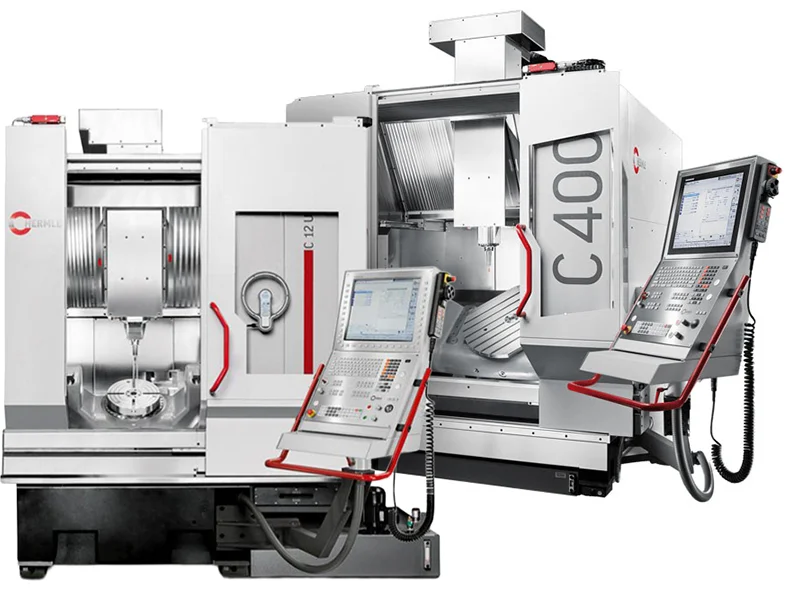
Koham Industries delivers complex 5-axis machining using advanced CNC technology built for tight tolerances and multi-axis accuracy. Our CNC equipment supports challenging geometries, compound angles and intricate features required by high-spec manufacturing environments.
FAQ
5-Axis Machining FAQs
What is 5-axis machining and how does it work?
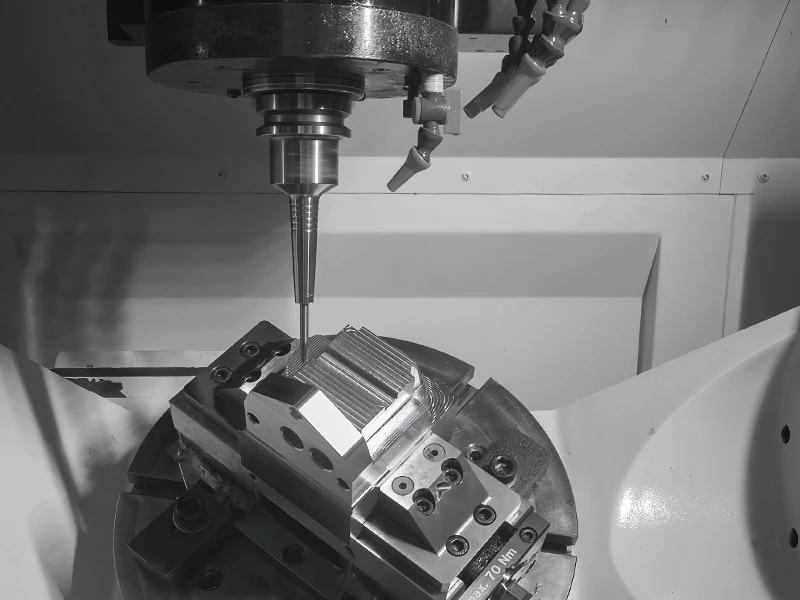
5-axis machining is an advanced CNC (Computer Numerical Control) manufacturing process where the cutting tool or workpiece moves simultaneously across five different axes—three linear axes (X, Y, Z) and two rotational axes (A, B, or C). This multi-directional movement allows the cutting tool to approach complex geometries from any angle, enabling the creation of intricate parts in a single setup.
What are the key advantages of 5-axis machining over 3-axis machining?
Compared to traditional 3-axis machining, 5-axis technology offers significant performance and efficiency benefits:
Fewer Setups: Machining multiple sides of a part in a single setup drastically reduces handling time and eliminates cumulative human alignment errors.
Superior Surface Finish: It allows for the use of shorter, more rigid cutting tools, minimizing vibration and enabling a consistent, high-quality surface finish.
Complex Geometries: Easily handles deep pockets, steep undercuts, and contoured surfaces that are impossible or inefficient to machine on standard 3-axis machines.
Which industries rely most heavily on 5-axis machining services?
Because of its unmatched precision and capability to handle complex parts, 5-axis machining is heavily utilized across mission-critical industries:
Aerospace: For manufacturing turbine blades, structural components, and engine parts.
Medical: For producing orthopedic implants, surgical instruments, and high-precision components like LASIK surgical device parts.
Automotive & Motorsports: For high-performance engine parts and intricate custom molds.
Electronics & Defense: For tight-tolerance housings and specialized hardware.
What level of precision and tolerances can 5-axis machining achieve?
Modern high-performance 5-axis CNC machines deliver exceptional accuracy. Depending on the material, part geometry, and machine calibration, manufacturers can consistently achieve tight tolerances down to microns (often within ±0.005 mm or tighter), making it the ideal choice for high-precision engineering applications.
How should I prepare my 3D CAD model to get a fast 5-axis machining quote?
To streamline the quotation process, export your design into a standard 3D CAD format such as STEP, IGES, or XT. Along with your file, be sure to clearly specify:
Material specifications (e.g., aerospace-grade titanium, aluminum alloys, medical-grade stainless steel).
Critical tolerances and surface roughness requirements.
Post-processing or finishing needs (e.g., anodizing, passivation, or bead blasting). Providing these details upfront allows machinists to accurately evaluate cycle times and provide a prompt, competitive estimate.