Custom Sheet Metal Fabrication Services
Sheet Metal Fabrication
Tailored Sheet Metal Solutions for Your Industrial Projects
Transform your technical designs into high-performance metal parts and full assemblies. Whether you need custom equipment housings, structural brackets, or specialized machinery enclosures, our engineering team is ready to analyze your drawings, optimize DFM (Design for Manufacturability), and provide reliable manufacturing support from prototype to mass production.
Sheet Metal Fabrication Capabilities
Explore fabrication processes for custom metal components, from flat sheet cutting to formed parts and assembled structures.

Laser Cutting
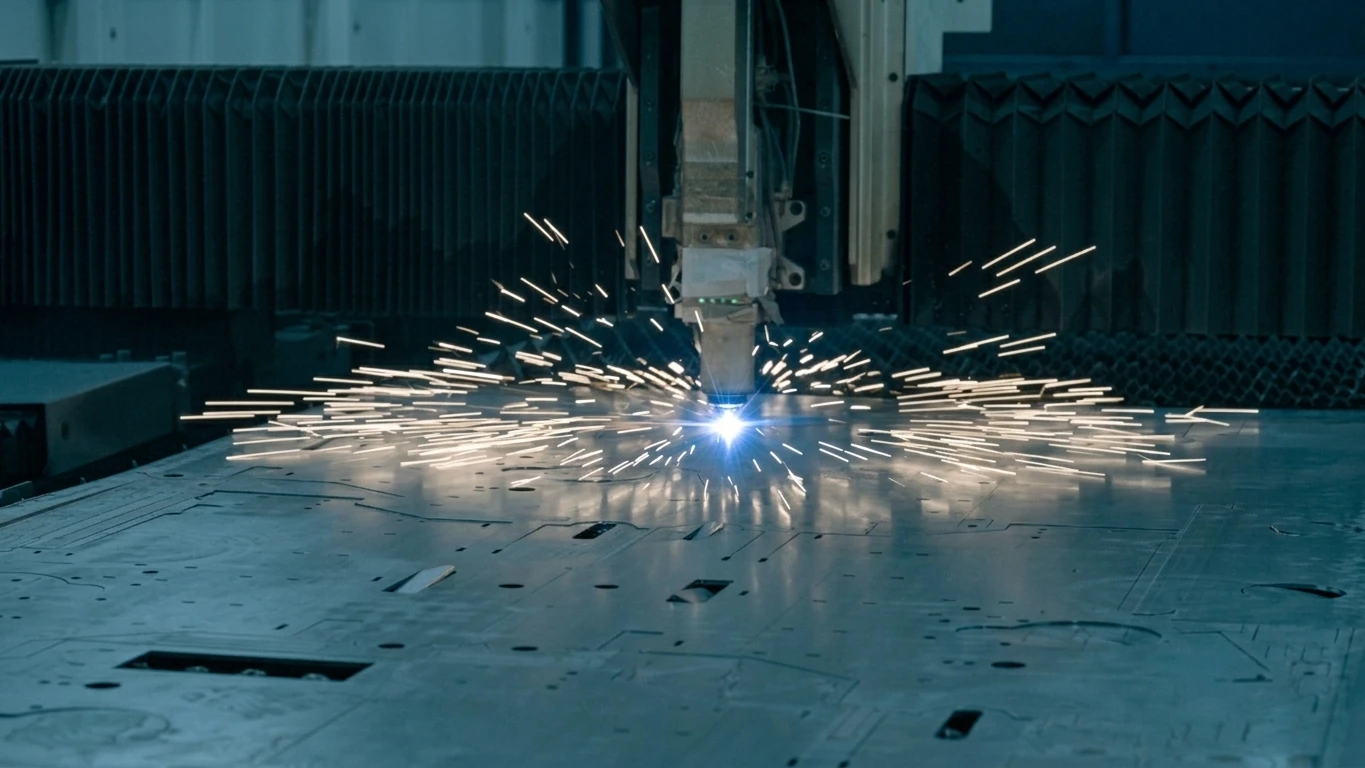
Laser cutting uses a focused laser beam to cut sheet metal into specified profiles, openings, and contours. It is suitable for brackets, panels, flat components, and parts with complex two-dimensional geometries.
Forming & Bending
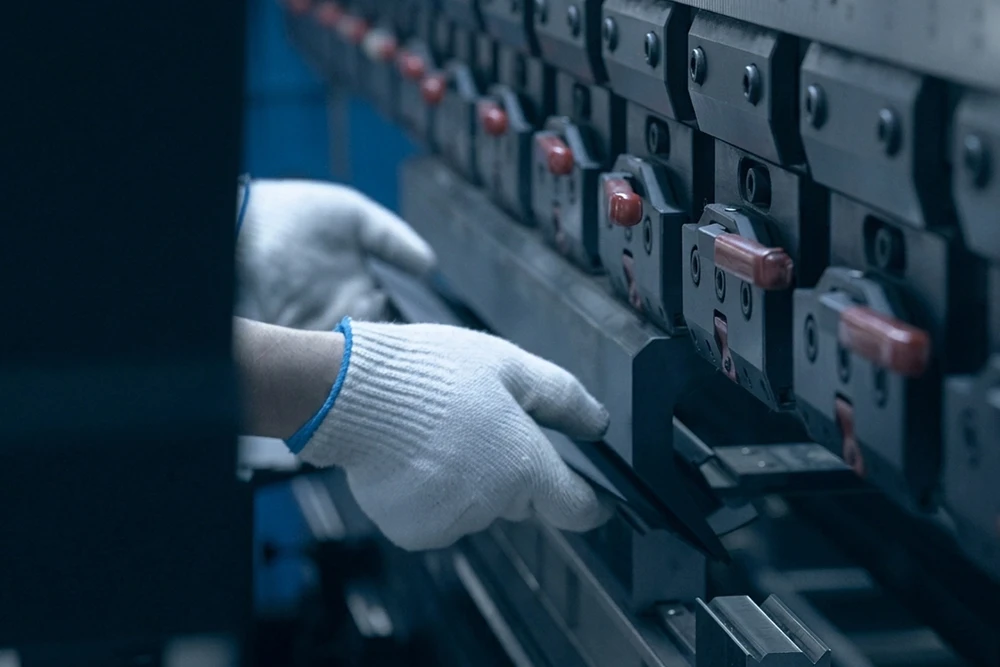
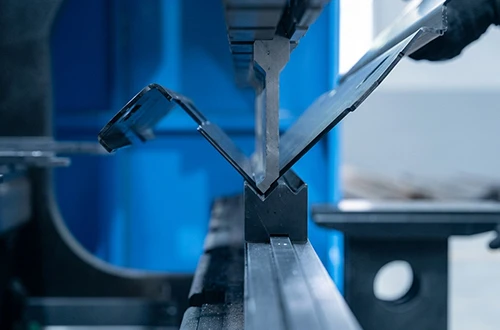
Sheet metal forming transforms flat blanks into functional three-dimensional shapes. Bending can create flanges, channels, brackets, mounting features, and enclosure structures according to the part design.
Deburring & Edge Finishing
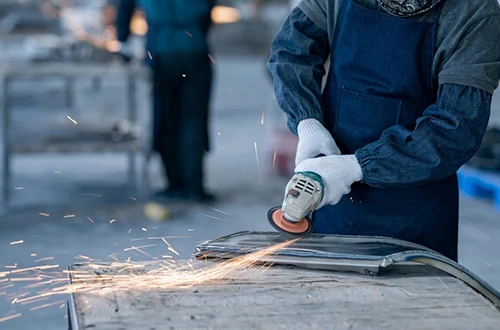
Deburring removes burrs and sharp edges left by cutting or punching. Edge finishing can improve handling safety and help prepare components for assembly or subsequent surface treatments.
Welding & Assembly
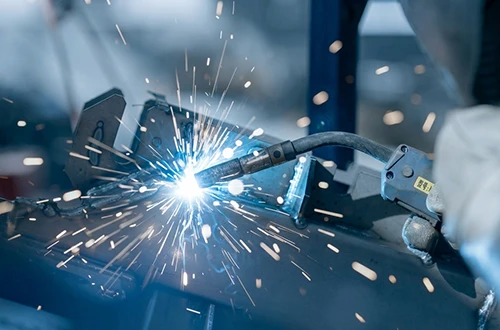
Multiple sheet metal components can be joined through suitable welding, riveting, or fastening methods to create enclosures, frames, brackets, and custom assemblies.
How Does Sheet Metal Fabrication Work?
During the sheet metal fabrication process, thin sheet metal stock is placed on a flat bed where a laser cutter
(1) draws programmed part patterns. Depending on the part geometry, a sheet metal punch
(2) can form additional features. Once the parts are deburred, they move to the press brake
(3) where they are formed into the final geometries. Additional secondary operations are often used to finish the sheet metal parts.
How Does Sheet Metal Fabrication Work?
A clear RFQ process helps reduce back-and-forth and gives buyers a faster path to a manufacturable solution.
Drawing Submission
Submit 2D engineering drawings, 3D CAD files when available, material preferences, quantities, and critical requirements.
Design & Process Review
Review part geometry, sheet thickness, bend requirements, hole locations, tolerances, and potential manufacturing constraints.
Material & Process Selection
Confirm suitable sheet metal materials, fabrication methods, finishing requirements, and assembly needs.
Fabrication & Finishing
Depending on the design, manufacturing may include cutting, punching, bending, deburring, hardware insertion, welding, and surface treatment.
Inspection & Delivery
Verify the agreed dimensional, appearance, and assembly requirements, then coordinate packaging and delivery.
View our Success Gallery to see our work!
Advantages of Sheet Metal Fabrication
Sheet metal fabrication is a practical solution for producing custom metal parts with consistent dimensions, reliable strength, and functional designs. Processes such as laser cutting, punching, and bending allow manufacturers to create everything from simple brackets and panels to complex enclosures and formed components. With a choice of materials, thicknesses, and surface finishes, sheet metal fabrication can meet different performance, appearance, and application requirements. It also supports both prototype development and production runs, making it a flexible option for businesses sourcing custom sheet metal parts for industrial equipment, machinery, and other manufactured products.
Sheet Metal Applications
Sheet metal is a versatile manufacturing process for a range of metal components. The process can support high-volume commodity products and low-volume, one-of-a-kind applications. Common sheet metal parts include:
- Electrical enclosure
- Parts for computer electronics
- Chassis
- Brackets
- Cabinets
- Mounts
- Appliances
Materials
Sheet Metal Materials for Custom Fabrication
Material selection depends on strength, weight, corrosion resistance, appearance, formability, and operating conditions.
Alloy Steel
Alloy steels include additional elements beyond carbon, which improve their hardness, toughness, and resistance to fatigue and wear. These steels are widely used in construction, automotive, and machinery due to their enhanced properties.
| Alloy Steel | UNS Designation | DIN Designation | ISO Designation |
|---|---|---|---|
| 4140 | 1.7225 | 708M40 | 42CrMo4 |
| 4340 | 1.6565 | 817M40 | 40NiCrMo6 |
| 8620 | 1.6523 | 805M20 | 20NiCrMo2 |
| 52100 | 1.3505 | 100Cr6 | SUJ2 |
| 4142 | 1.7227 | 708M40T | 41CrMoS4 |
| 6150 | 1.8159 | 735A51 | 50CrV4 |
Aluminum
Aluminum alloys are lightweight and strong, with excellent thermal and electrical conductivity. They are also resistant to corrosion and can be anodized for added protection, making them ideal for aerospace and packaging industries.
| Aluminum Alloy | UNS Designation | DIN Designation | ISO Designation |
|---|---|---|---|
| 7075-T651 | 3.4365 | 76528 | AlZn5.5MgCu |
| 6082-T651 | 3.2315 | 64430 | AlSi1MgMn |
| 6060 | 3.3206 | EN AW-6060 | AlMgSi |
| 5052 | EN AW-5052 | 3.3523 | AlMg2,5 |
| 2017A | 3.1325 | 24530 | AlCu4MgSi |
Brass
Brass is a metal known for its easy machinability and good electrical conductivity. It is ideal for applications requiring low friction, such as gears, locks, and musical instruments.
| Brass | UNS Designation | DIN Designation | Alternative Designation |
|---|---|---|---|
| C36000 | UNS C36000 | CUZN39PB3 | CuZn39Pb3 |
| C46400 | UNS C46400 | CuZn38Al | Naval Brass |
| C93200 | UNS C93200 | Saems 660 | Bearing Bronze |
| C48500 | UNS C48500 | CuZn39Sn1 | Leaded Muntz Metal |
| C26000 | UNS C26000 | CUZN30 | Cartridge Brass |
| C37700 | UNS C37700 | CUZN40PB2 | Forging Brass |
Copper
Copper is excellent at conducting heat and electricity, making it perfect for electrical uses like busbars and wire connectors. It is easily recognized by its shiny reddish-orange color and is also used in plumbing and roofing.
| Copper | UNS Designation | DIN Designation | Alternative Designation |
|---|---|---|---|
| C11000 | UNS C11000 | Cu-ETP | Electrolytic Tough Pitch (ETP) Copper |
| C10100 | UNS C10100 | OF-OK | Oxygen-Free Electronic (OFE) Copper |
| C10200 | UNS C10200 | OF-Cu | Oxygen-Free (OF) Copper |
| C28000 | UNS C28000 | CuZn40 | Muntz Metal |
| C14500 | UNS C14500 | TeCu | Tellurium Copper |
Hastelloy
Hastelloy is a group of nickel alloys known for their high resistance to corrosion, pitting, and stress-corrosion cracking. They are often used in harsh environments like chemical processing and aerospace, where durability is crucial.
| Hastelloy | UNS Designation | DIN Designation | Alternative Designation |
|---|---|---|---|
| C276 | UNS N10276 | 2.4819 | NiMo16Cr15W |
| C22 | UNS N06022 | 2.4602 | NiCr21Mo14W |
| B-2 | UNS N10665 | 2.4617 | NiMo28 |
| X | UNS N06002 | 2.4665 | NiCr22Fe18Mo |
| C2000 | UNS N06200 | 2.4675 | NiCr23Mo16Cu |
| G-30 | UNS N06030 | 2.4603 | NiCr29Mo9Fe |
Inconel
Inconel is a strong, corrosion-resistant nickel alloy, ideal for challenging aerospace applications. It can withstand extreme temperatures and pressures, making it suitable for jet engines and gas turbines.
| Inconel | UNS Designation | DIN Designation | Alternative Designation |
|---|---|---|---|
| 718 | UNS N07718 | 2.4668 | NiCr19Fe19Nb5Mo3 |
| 625 | UNS N06625 | 2.4856 | NiCr22Mo9Nb |
| 600 | UNS N06600 | 2.4816 | NiCr15Fe |
| X-750 | UNS N07750 | 2.4669 | NiCr15Fe7TiAl |
| 601 | UNS N06601 | 2.4851 | NiCr23Fe |
| 725 | UNS N07725 | 2.4668 | NiCr19Fe19Nb5Mo3 |
Invar
Invar is a nickel alloy with very low thermal expansion, making it highly stable and perfect for precision applications such as instrumentation and aerostructure molds. It is also used in scientific instruments where dimensional stability is critical.
| Invar | UNS Designation | DIN Designation | Alternative Designation |
|---|---|---|---|
| 36 | UNS K93600 | 1.3912 | FeNi36 |
| 42 | UNS K94200 | 1.3917 | FeNi42 |
| 48 | UNS K94800 | 1.3922 | FeNi48 |
| 32-5 | UNS K94610 | 1.3911 | FeNi32-5 |
| 42-6 | UNS K94620 | 1.3913 | FeNi42-6 |
| 46 | UNS K94630 | 1.3914 | FeNi46 |
Maraging Steel
Maraging steels are ultra-high-strength steels that are easy to machine and weld without causing distortion. They gain their exceptional hardness and toughness from a special heat-treating process, making them suitable for aerospace and tooling applications.
| Maraging Steel | UNS Designation | DIN Designation | Alternative Designation |
|---|---|---|---|
| 200 | UNS K93120 | 1.6359 | 20Ni Maraging Steel C200 |
| 250 | UNS K92890 | 1.6358 | 18Ni Maraging Steel C250 |
| 300 | UNS K93120 | 1.6354 | 18Ni Maraging Steel C300 |
| 350 | UNS K93160 | 1.6356 | 18Ni Maraging Steel C350 |
| 400 | UNS K91460 | 1.6352 | Custom 465 Stainless |
| 500 | UNS K92810 | 1.6354 | Custom Age 625 Plus |
Stainless Steel
Stainless steel is known for its strength, heat, and corrosion resistance, along with its durability and attractive appearance. These qualities make it suitable for a wide range of uses, including kitchenware, medical instruments, and construction.
| Stainless Steel | UNS Designation | DIN Designation | Alternative Designation |
|---|---|---|---|
| 316L | UNS S31603 | X2CrNiMo17-12-2 | Stainless Steel 316L |
| 304 | UNS S30400 | X5CrNi18-10 | Stainless Steel 304 |
| 17-4 PH | UNS S17400 | X5CrNiCuNb16-4 | Stainless Steel 17-4 PH |
| 303 | UNS S30300 | X8CrNiS18-9 | Stainless Steel 303 |
| 420 | UNS S42000 | X20Cr13 | Stainless Steel 420 |
| 440C | UNS S44004 | X105CrMo17 | Stainless Steel 440C |
Titanium
Titanium is a lightweight metal with excellent strength, low thermal expansion, and high corrosion resistance. Its ability to be sterilized and its biocompatibility make it unique, especially in medical implants and aerospace components.
| Titanium Grade | UNS Designation | DIN Designation | Alternative Designation |
|---|---|---|---|
| 5 (Ti-6Al-4V) | UNS R56400 | 3.7165 | Ti-6Al-4V |
| 2 | UNS R50400 | 3.7035 | CP Titanium |
| 23 (Ti-6Al-4V ELI) | UNS R56401 | 3.7165 | Ti-6Al-4V ELI |
| 9 (Ti-3Al-2.5V) | UNS R56320 | 3.7195 | Ti-3Al-2.5V |
| 7 (Ti-0.2Pd) | UNS R52400 | 3.7235 | Ti-0.2Pd |
| 12 (Ti-0.3Mo-0.8Ni) | UNS R53400 | 3.7105 | Ti-0.3Mo-0.8Ni |
Tool Steel
Tool steels are hard, stiff, and resistant to abrasion, making them perfect for manufacturing industrial tools. Their robustness is essential for cutting, drilling, and molding applications in various industries.
| Tool Steel | UNS Designation | DIN Designation | Alternative Designation |
|---|---|---|---|
| D2 | UNS T30402 | 1.2379 | X155CrVMo12-1 |
| M2 | UNS T11302 | 1.3343 | HS6-5-2C |
| A2 | UNS T30102 | 1.2363 | X100CrMoV5-1 |
| S7 | UNS T41907 | 1.2355 | 50CrMoV13-15 |
| O1 | UNS T31501 | 1.2510 | 100MnCrW4 |
| H13 | UNS T20813 | 1.2344 | X40Cr |
Why Choose Koham for Sheet Metal Parts?
Custom Manufacturing Solutions
We work from your engineering drawings, CAD files, and specifications to support the manufacturing of sheet metal parts designed for your application.
Flexible Project Requirements
Whether you need custom brackets, equipment enclosures, mounting plates, or formed metal components, manufacturing options can be evaluated according to your part design and order requirements.
Integrated Process Coordination
Cutting, bending, finishing, and assembly requirements can be considered together to help align individual components with your overall project needs.
Reliable B2B Partnership
We prioritize clear communication, technical requirement review, and project coordination to support customers throughout the manufacturing process and build long-term business relationships.
FAQ
Sheet Metal Fabrication FAQs
What is sheet metal fabrication?
Sheet metal fabrication is a manufacturing process that transforms flat metal sheets into functional components through processes such as cutting, punching, bending, forming, and assembly. Additional operations may be used to achieve specific dimensional, functional, or surface requirements.
Which materials are commonly used for sheet metal fabrication?
Common materials include aluminum, stainless steel, carbon steel, galvanized steel, copper, and brass. The appropriate choice depends on strength, corrosion resistance, weight, formability, appearance, and the intended application.
Which file formats should I provide for a sheet metal quote?
Dimensioned 2D engineering drawings are useful for communicating dimensions, tolerances, and finishing requirements. 3D CAD files and flat-pattern drawings can also help clarify part geometry and manufacturing intent. Supported file formats should be confirmed before submission.
Can sheet metal parts be customized?
Yes. Custom sheet metal components can be designed around specified dimensions, material grades, cutouts, bends, mounting features, surface finishes, and assembly requirements, subject to manufacturing feasibility.
What finishing options are available for sheet metal parts?
Depending on the manufacturing process and material, available options may include deburring, powder coating, wet painting, plating, laser marking, printing, welding, hardware insertion, and assembly. The suitable options should be confirmed for each project.
What affects the cost of sheet metal fabrication?
Cost is influenced by material type and thickness, part dimensions, cutting complexity, number of bends, tolerance requirements, production quantity, finishing, hardware, and assembly. Providing complete drawings and specifications can help support a more accurate project review.