




Custom Metal Laser Cutting Services

laser cutting

Custom Laser-Cut Metal Parts for Your Industrial Projects

Turn your technical drawings into custom laser-cut metal components for industrial equipment, machinery, and product assemblies. From mounting plates and brackets to panels and equipment enclosures, Koham supports project-specific material selection and manufacturing requirements. Share your drawings and specifications with our team to discuss suitable cutting solutions for your application.

What Is Laser Cutting

What Is Laser Cutting?

Understand how laser cutting transforms sheet metal into custom components with detailed contours and precise features.


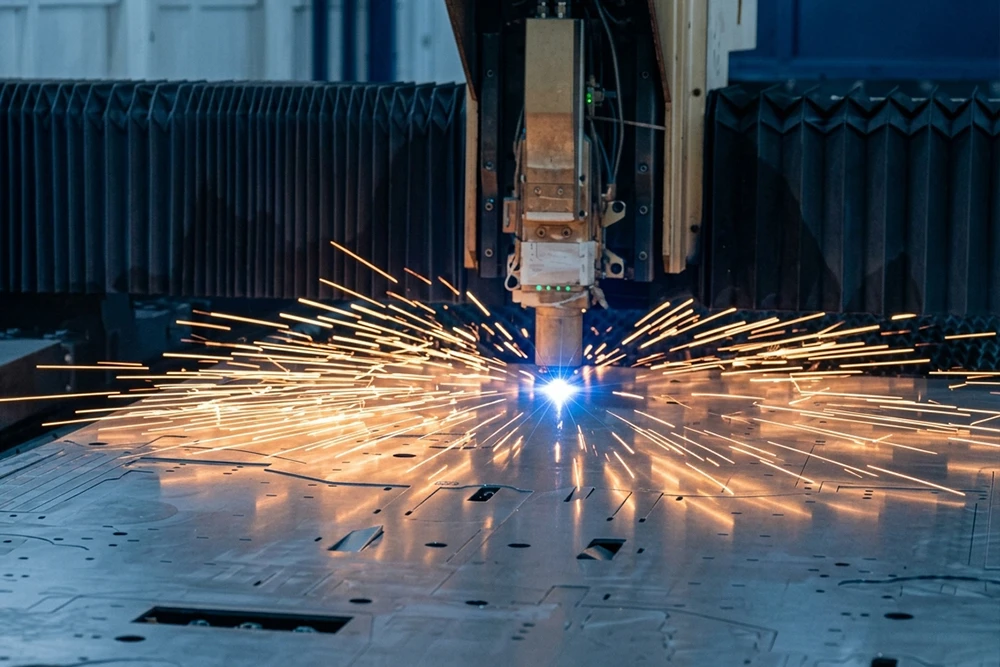
Laser cutting is a manufacturing process that uses a focused laser beam to cut material along a programmed path. In sheet metal fabrication, it is commonly used to create flat components with defined outlines, openings, slots, and intricate profiles.

Based on a digital design, the cutting path can be programmed to match the part geometry, making laser cutting suitable for customized components without requiring a dedicated cutting die for every design.

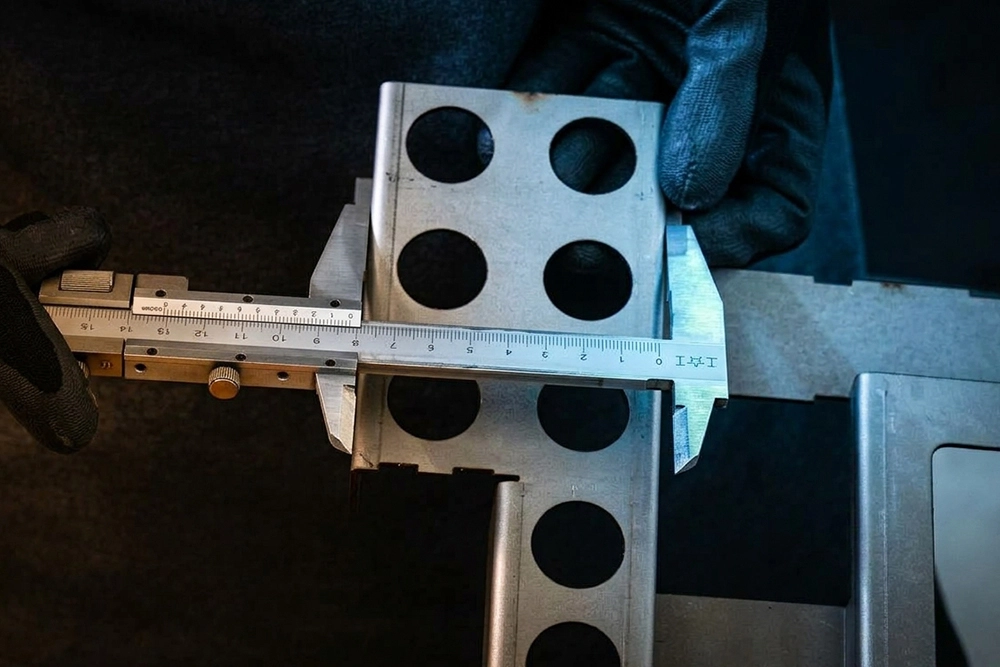
From simple metal plates to parts with multiple holes and complex contours, laser cutting offers design flexibility for industrial equipment, enclosures, machinery, and other manufactured products. Material type, thickness, feature size, and dimensional requirements all influence the appropriate cutting process and achievable results.

Advantages of Laser Cutting

Complex Geometries

Create intricate contours, slots, openings, and custom profiles from digital designs, subject to material and feature limitations.

Flexible Design Changes

Programmed cutting paths make design updates easier to accommodate without creating a dedicated cutting die for every geometry.

Repeatable Cutting

CNC-controlled cutting paths support consistent feature placement across repeat parts when designs and process settings are properly controlled.

Versatile Part Applications

Produce a variety of flat metal components, including mounting plates, brackets, panels, washers, and custom profiles.

Materials

Materials for Custom Laser Cutting

Choose a suitable metal based on strength, weight, corrosion resistance, conductivity, and application requirements.

DM 20260930142519 001

Alloy Steel

Alloy steels include additional elements beyond carbon, which improve their hardness, toughness, and resistance to fatigue and wear. These steels are widely used in construction, automotive, and machinery due to their enhanced properties.

Alloy SteelUNS DesignationDIN DesignationISO Designation
41401.7225708M4042CrMo4
43401.6565817M4040NiCrMo6
86201.6523805M2020NiCrMo2
521001.3505100Cr6SUJ2
41421.7227708M40T41CrMoS4
61501.8159735A5150CrV4
DM 20260930142519 002

Aluminum

Aluminum alloys are lightweight and strong, with excellent thermal and electrical conductivity. They are also resistant to corrosion and can be anodized for added protection, making them ideal for aerospace and packaging industries.

Aluminum AlloyUNS DesignationDIN DesignationISO Designation
7075-T651 3.4365 76528 AlZn5.5MgCu
6082-T651 3.2315 64430 AlSi1MgMn
6060 3.3206 EN AW-6060 AlMgSi
5052 EN AW-5052 3.3523 AlMg2,5
2017A 3.1325 24530 AlCu4MgSi
DM 20260930142519 003

Brass

Brass is a metal known for its easy machinability and good electrical conductivity. It is ideal for applications requiring low friction, such as gears, locks, and musical instruments.

BrassUNS DesignationDIN DesignationAlternative Designation
C36000 UNS C36000 CUZN39PB3 CuZn39Pb3
C46400 UNS C46400 CuZn38Al Naval Brass
C93200 UNS C93200 Saems 660 Bearing Bronze
C48500 UNS C48500 CuZn39Sn1 Leaded Muntz Metal
C26000 UNS C26000 CUZN30 Cartridge Brass
C37700 UNS C37700 CUZN40PB2 Forging Brass
DM 20260930142519 004

Copper

Copper is excellent at conducting heat and electricity, making it perfect for electrical uses like busbars and wire connectors. It is easily recognized by its shiny reddish-orange color and is also used in plumbing and roofing.

CopperUNS DesignationDIN DesignationAlternative Designation
C11000 UNS C11000 Cu-ETP Electrolytic Tough Pitch (ETP) Copper
C10100 UNS C10100 OF-OK Oxygen-Free Electronic (OFE) Copper
C10200 UNS C10200 OF-Cu Oxygen-Free (OF) Copper
C28000 UNS C28000 CuZn40 Muntz Metal
C14500 UNS C14500 TeCu Tellurium Copper
DM 20260930142519 005

Hastelloy

Hastelloy is a group of nickel alloys known for their high resistance to corrosion, pitting, and stress-corrosion cracking. They are often used in harsh environments like chemical processing and aerospace, where durability is crucial.

HastelloyUNS DesignationDIN DesignationAlternative Designation
C276 UNS N10276 2.4819 NiMo16Cr15W
C22 UNS N06022 2.4602 NiCr21Mo14W
B-2 UNS N10665 2.4617 NiMo28
X UNS N06002 2.4665 NiCr22Fe18Mo
C2000 UNS N06200 2.4675 NiCr23Mo16Cu
G-30 UNS N06030 2.4603 NiCr29Mo9Fe
DM 20260930142519 006

Inconel

Inconel is a strong, corrosion-resistant nickel alloy, ideal for challenging aerospace applications. It can withstand extreme temperatures and pressures, making it suitable for jet engines and gas turbines.

InconelUNS DesignationDIN DesignationAlternative Designation
718 UNS N07718 2.4668 NiCr19Fe19Nb5Mo3
625 UNS N06625 2.4856 NiCr22Mo9Nb
600 UNS N06600 2.4816 NiCr15Fe
X-750 UNS N07750 2.4669 NiCr15Fe7TiAl
601 UNS N06601 2.4851 NiCr23Fe
725 UNS N07725 2.4668 NiCr19Fe19Nb5Mo3
DM 20260930142519 007

Invar

Invar is a nickel alloy with very low thermal expansion, making it highly stable and perfect for precision applications such as instrumentation and aerostructure molds. It is also used in scientific instruments where dimensional stability is critical.

InvarUNS DesignationDIN DesignationAlternative Designation
36 UNS K93600 1.3912 FeNi36
42 UNS K94200 1.3917 FeNi42
48 UNS K94800 1.3922 FeNi48
32-5 UNS K94610 1.3911 FeNi32-5
42-6 UNS K94620 1.3913 FeNi42-6
46 UNS K94630 1.3914 FeNi46
DM 20260930142519 008

Maraging Steel

Maraging steels are ultra-high-strength steels that are easy to machine and weld without causing distortion. They gain their exceptional hardness and toughness from a special heat-treating process, making them suitable for aerospace and tooling applications.

Maraging SteelUNS DesignationDIN DesignationAlternative Designation
200 UNS K93120 1.6359 20Ni Maraging Steel C200
250 UNS K92890 1.6358 18Ni Maraging Steel C250
300 UNS K93120 1.6354 18Ni Maraging Steel C300
350 UNS K93160 1.6356 18Ni Maraging Steel C350
400 UNS K91460 1.6352 Custom 465 Stainless
500 UNS K92810 1.6354 Custom Age 625 Plus
DM 20260930142519 009

Stainless Steel

Stainless steel is known for its strength, heat, and corrosion resistance, along with its durability and attractive appearance. These qualities make it suitable for a wide range of uses, including kitchenware, medical instruments, and construction.

Stainless SteelUNS DesignationDIN DesignationAlternative Designation
316L UNS S31603 X2CrNiMo17-12-2 Stainless Steel 316L
304 UNS S30400 X5CrNi18-10 Stainless Steel 304
17-4 PH UNS S17400 X5CrNiCuNb16-4 Stainless Steel 17-4 PH
303 UNS S30300 X8CrNiS18-9 Stainless Steel 303
420 UNS S42000 X20Cr13 Stainless Steel 420
440C UNS S44004 X105CrMo17 Stainless Steel 440C
DM 20260930142519 008

Titanium

Titanium is a lightweight metal with excellent strength, low thermal expansion, and high corrosion resistance. Its ability to be sterilized and its biocompatibility make it unique, especially in medical implants and aerospace components.

Titanium GradeUNS DesignationDIN DesignationAlternative Designation
5 (Ti-6Al-4V) UNS R56400 3.7165 Ti-6Al-4V
2 UNS R50400 3.7035 CP Titanium
23 (Ti-6Al-4V ELI) UNS R56401 3.7165 Ti-6Al-4V ELI
9 (Ti-3Al-2.5V) UNS R56320 3.7195 Ti-3Al-2.5V
7 (Ti-0.2Pd) UNS R52400 3.7235 Ti-0.2Pd
12 (Ti-0.3Mo-0.8Ni) UNS R53400 3.7105 Ti-0.3Mo-0.8Ni
DM 20260930142519 011

Tool Steel

Tool steels are hard, stiff, and resistant to abrasion, making them perfect for manufacturing industrial tools. Their robustness is essential for cutting, drilling, and molding applications in various industries.

Tool SteelUNS DesignationDIN DesignationAlternative Designation
D2 UNS T30402 1.2379 X155CrVMo12-1
M2 UNS T11302 1.3343 HS6-5-2C
A2 UNS T30102 1.2363 X100CrMoV5-1
S7 UNS T41907 1.2355 50CrMoV13-15
O1 UNS T31501 1.2510 100MnCrW4
H13 UNS T20813 1.2344 X40Cr

Not sure which material suits your application? Share your part drawings, material preferences, and functional requirements for a project-specific review. Discuss Your Material Requirements

Laser Cutting Design Guidelines

Good part design helps improve manufacturability, manage cutting costs, and achieve the required dimensions.

Design Guidelines for Laser-Cut Parts

Designing parts with the cutting process in mind can help reduce avoidable manufacturing issues and support consistent results.

Select a material thickness that meets the part’s structural and functional requirements. Thickness can influence cutting feasibility, edge quality, processing time, and overall part cost.

Kerf is the width of material removed during cutting. Account for the cutting kerf when designing narrow features, closely spaced contours, and small openings.

Very small holes and narrow slots can be difficult to produce consistently, particularly in thicker materials. Suitable feature dimensions should be evaluated in relation to material thickness and the required tolerances.

Allow sufficient material between holes or cutouts and the outer edge of a part to help maintain structural integrity and avoid unwanted deformation or damage.

Specify tolerances according to the functional requirements of the part. Critical dimensions, mounting holes, and mating features should be clearly identified on the engineering drawing.

Provide dimensioned 2D drawings and, where available, CAD files or DXF profiles. Clearly indicate units, material specifications, thickness, critical dimensions, and any special edge or finishing requirements.

Final design recommendations depend on the selected material, thickness, geometry, equipment, and project specifications.

Design Guidelines for Laser Cut Parts

Applications of Laser-Cut Metal Parts

Custom-cut components for industrial equipment, electronics, machinery, and other engineered products.

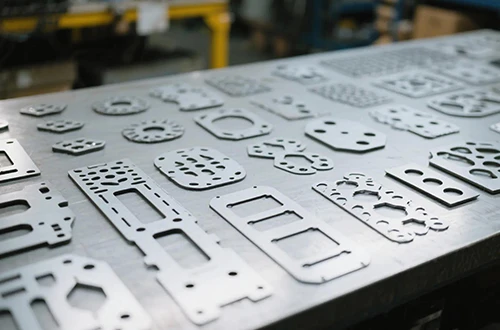
Mounting Plates

Mounting Plates

Flat plates with mounting holes, slots, and specified cutout patterns.
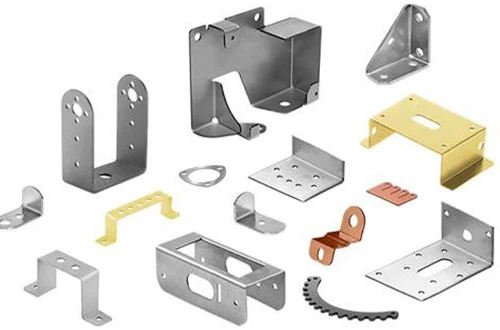
Brackets Supports

Brackets & Supports

Custom profiles used for equipment mounting, fastening, and structural support.
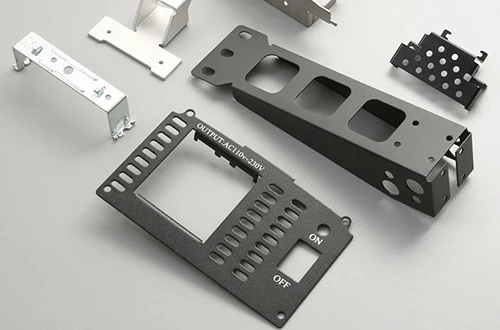
Enclosures Chassis Parts

Enclosures & Chassis Parts

Cut panels and component blanks used in equipment housings and chassis assemblies.
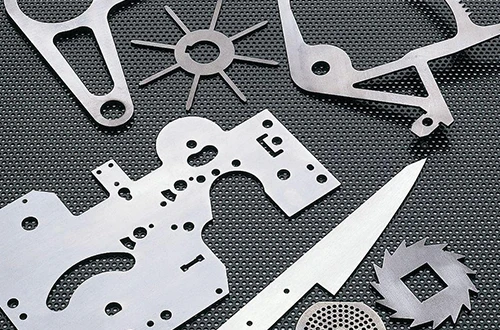
Custom Sheet Metal Parts

Custom Sheet Metal Parts

Components manufactured from customer-supplied drawings and part specifications.

View our Success Gallery to see our work!

How Does Sheet Metal Fabrication Work?

A clear RFQ process helps reduce back-and-forth and gives buyers a faster path to a manufacturable solution.

Submit Your Drawings

Provide your CAD or DXF files, engineering drawings, material requirements, estimated quantities, and critical dimensions.

Design & Feasibility Review

Review geometry, material thickness, feature sizes, tolerances, and other manufacturing considerations.

Material & Process Confirmation

Confirm the proposed material, cutting requirements, quantities, and any secondary operations.

Cutting & Finishing

Manufacture the parts according to the approved specifications and agreed finishing requirements.

Inspection & Delivery

Review the specified dimensions and quality requirements before coordinating packaging and delivery.

FAQ

Laser Cutting FAQs

What is metal laser cutting?

Metal laser cutting uses a focused laser beam to cut metal according to a programmed path. It is commonly used to produce flat parts with specific contours, holes, slots, and other cutout features.

Common laser-cut sheet metals include aluminum, stainless steel, carbon steel, galvanized steel, copper, and brass. Material suitability depends on the grade, thickness, equipment, and required cutting quality.

Dimensioned engineering drawings and suitable 2D profiles, such as DXF files, are useful for defining the required geometry. CAD files may also be helpful for review. Confirm supported formats and include material, thickness, dimensions, and tolerances.

The maximum cutting thickness depends on the material, laser system, cutting parameters, and required edge quality. Share your material and thickness requirements so the available manufacturing range can be evaluated.

Cost factors include material type and thickness, part dimensions, cutting path length, feature complexity, order quantity, tolerances, and any required deburring or finishing. Complete drawings can help support a more accurate quotation.

Yes, laser-cut blanks can often be followed by bending, forming, deburring, coating, or assembly, depending on the part design and available manufacturing capabilities. These requirements should be specified when requesting a quote.

Scroll to Top